Field guide

Read a shoelike a maker.

Most of what makes a shoe good is out of sight: under the footbed, inside the sole, in a word on the label. Here are six things worth knowing before you buy any pair, ours included.

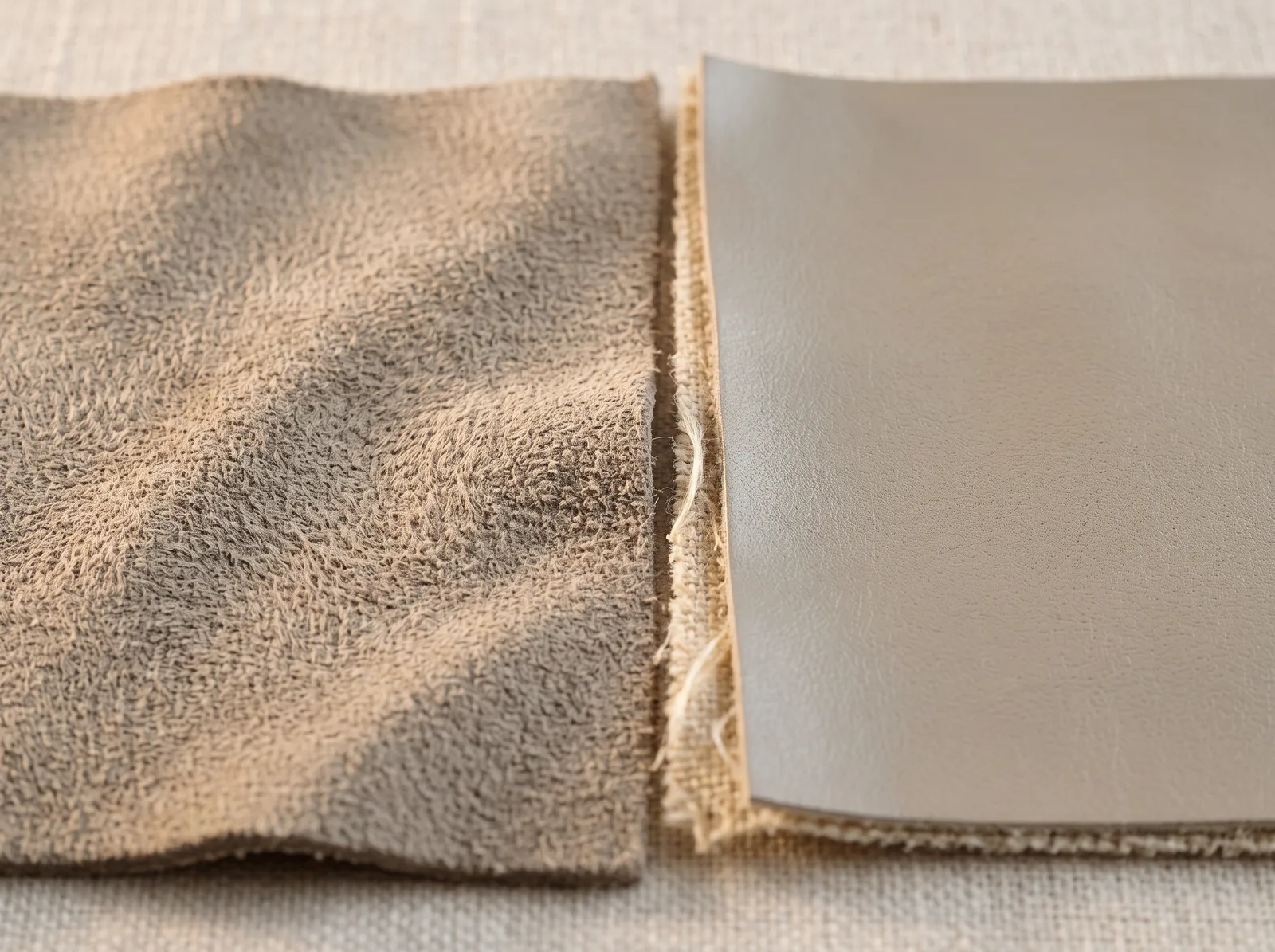
Two swatches side by side: brushed leather suede with a soft nap on the left, a smooth polyurethane coating on a fabric backing on the rightConcept image
01Note 1 of 6

Suede, or “PU suede”?

Real suede is leather: the inner side of the hide, brushed to a soft nap. “PU suede”, “synthetic suede” and most “microsuede” are a polyurethane finish on a fabric backing, made to look like it.

Both can look good on the shelf. The difference is how they wear: leather breathes and takes up moisture, while a coating breathes far less, which you notice on a hot day without socks.

Check in the shop

Read the upper-material line on the label. Leather says leather.
A thumb pressing into a soft olive foam footbed, the foam dimpling around itConcept image
02Note 2 of 6

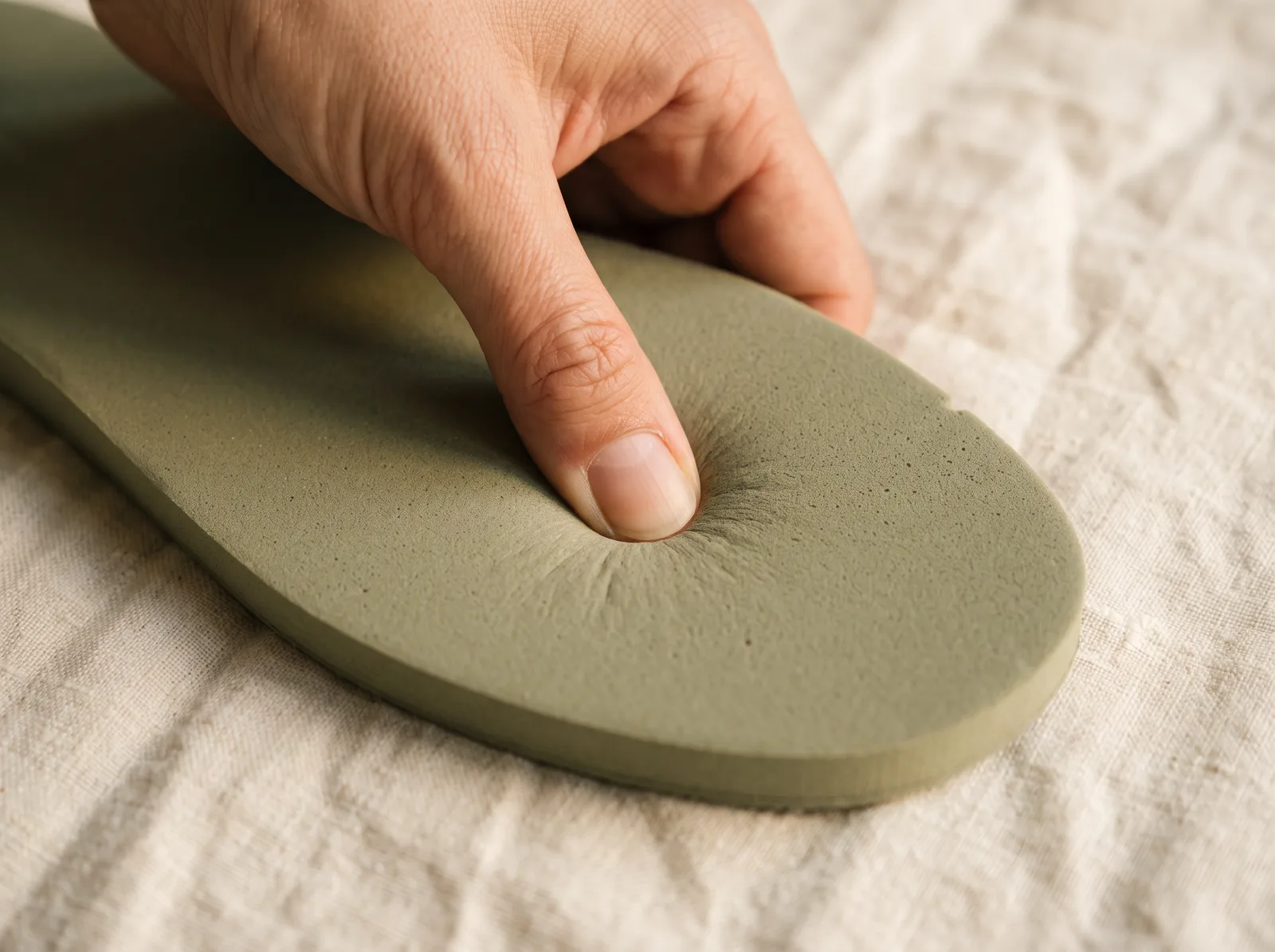
Memory foam

Memory foam is slow-recovery foam. It sinks under your foot and takes its time coming back, which is why it feels so good when you try a shoe on.

Over a long day, slow recovery means it can stay pressed down where you load it most, under the heel and the ball of the foot. Open-cell foam springs back and lets air move through.

Check in the shop

Press your thumb into the footbed and let go. Does it spring back, or slowly fill in?

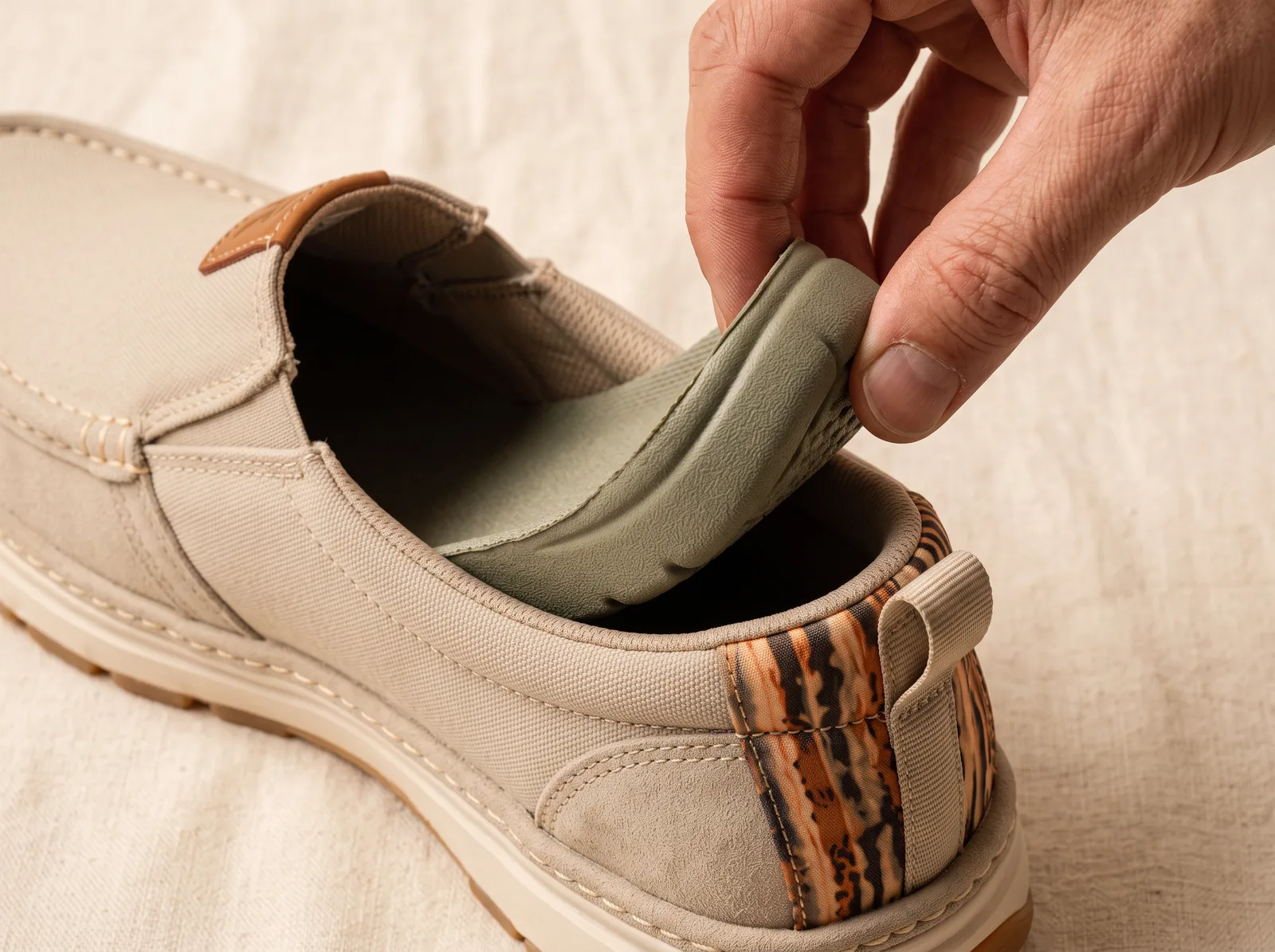
A hand lifting a moulded olive footbed with a heel cup out of a stone canvas slip-onConcept image
03Note 3 of 6

The insole

A removable insole isn’t a sign of a cheap shoe. Most serious comfort shoes have one, so you can air it, wash it or swap in your own orthotic.

What matters is how it’s made. A flat sheet of thin foam has nothing holding it in place, so it slides and bunches. A moulded footbed has a heel cup and sits in a matching hollow in the sole.

Check in the shop

Lift it out. Is it shaped, with a heel cup, or is it a flat sheet?

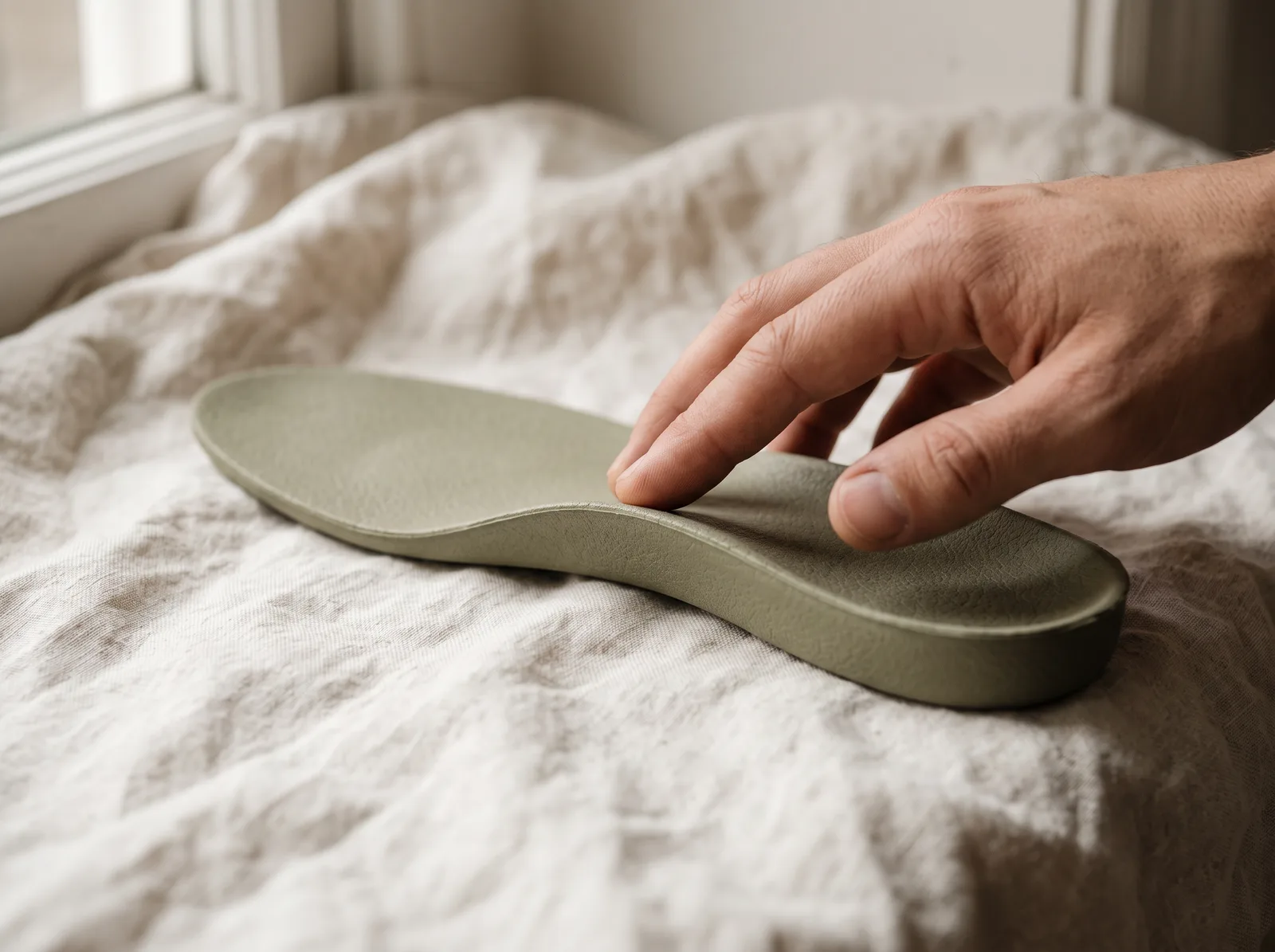
Fingers running along the low, wide arch of a moulded olive footbed lying on linenConcept image
04Note 4 of 6

The arch

A tall arch feels supportive in the box. In studies of healthy adults, though, soft, gently shaped insoles were rated more comfortable than deeply contoured ones, and a tall arch takes up room over the top of your foot.

If your feet need correcting, a podiatrist’s orthotic does that job. A good shoe leaves room for one.

Check in the shop

Feel the arch with your hand. Gentle and wide, or a hard dome?

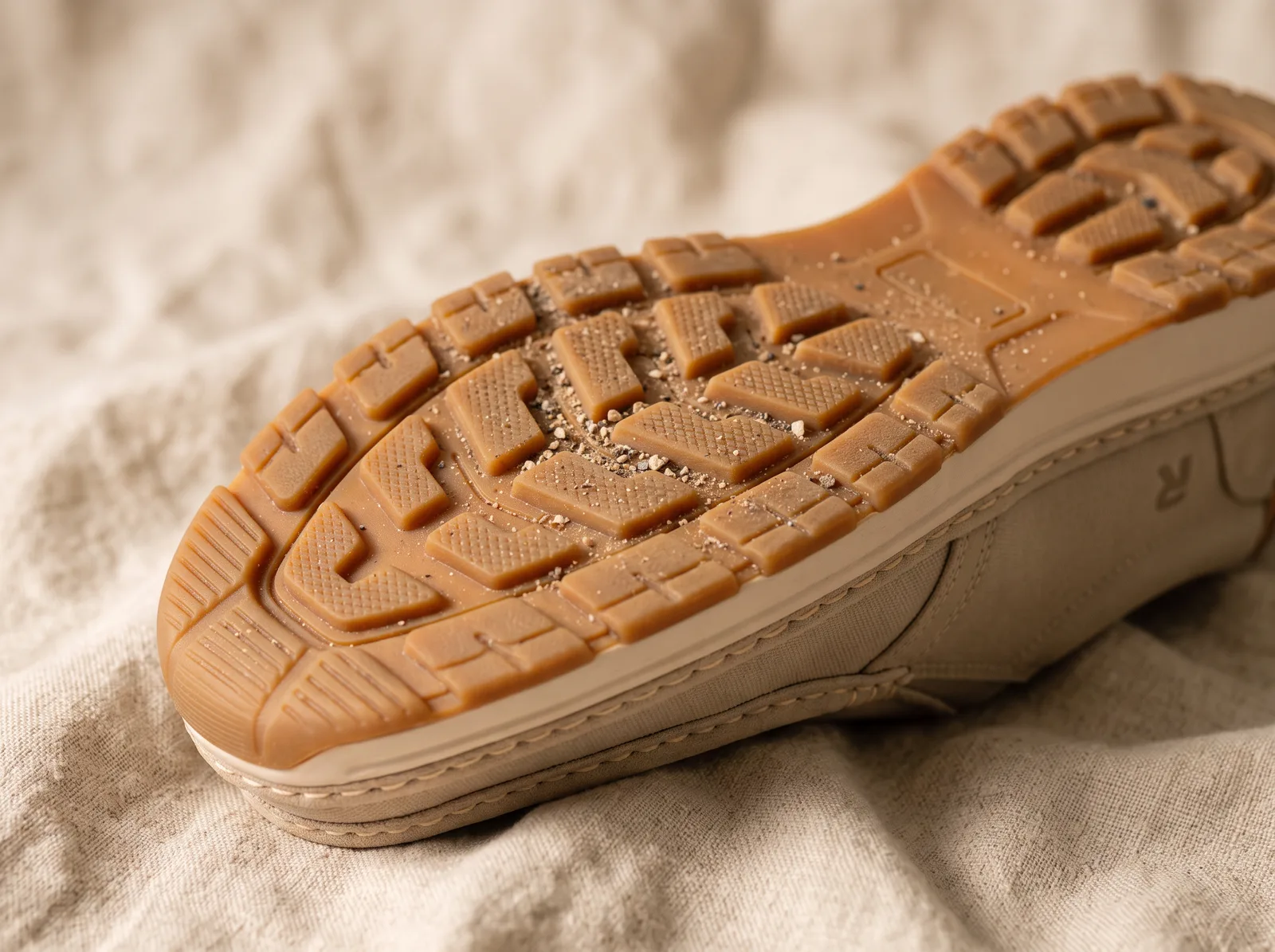
A slip-on turned upside down on linen, showing a honey-gum rubber outsole with deep lugs and a little fine gravelConcept image
05Note 5 of 6

The sole

Foam is light and soft, but on its own it wears quickly on tar and gravel. In one lab test, a shoe with bare foam underneath lost 5.9 mm of tread, against an average of 1.3 mm for shoes with rubber.

Rubber where you meet the ground is what lasts. And “gum” describes a colour, not a material.

Check in the shop

Turn the shoe over. Is it rubber all over, or foam with rubber patches?

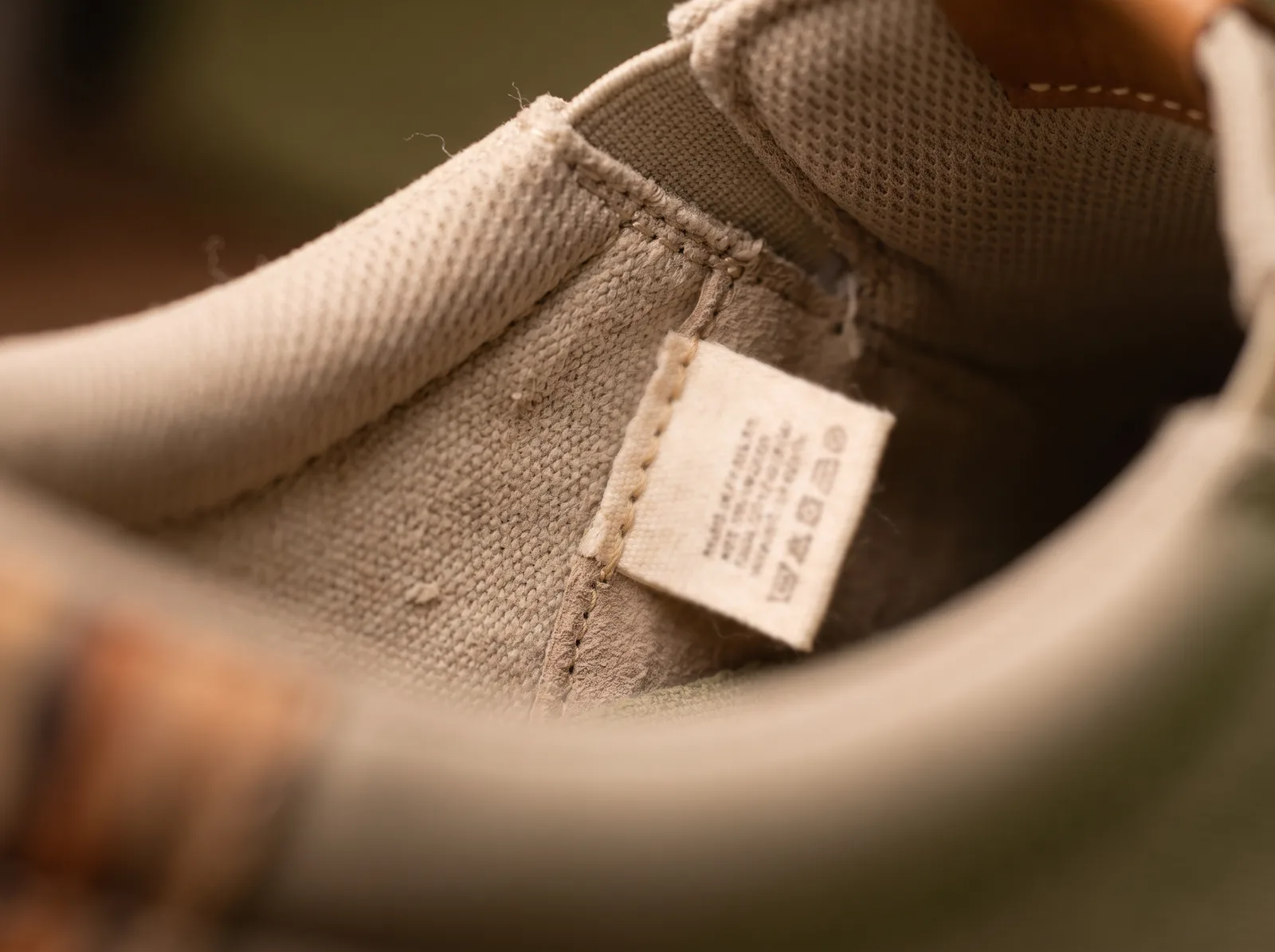
Close-up of a small woven care label sewn inside the heel of a canvas shoe, its print out of focusConcept image
06Note 6 of 6

The label

Every pair sold in South Africa must carry a permanent label showing where it was made, what it’s made of and how to care for it.

It’s small and easy to skip, but it’s the one part of a shoe that has to be specific.

Check in the shop

Find the sewn-in or printed label inside, not just the box sticker.

R01

What we chosefor the R01.

Cotton duck canvas with real cow-split suede. A soft open-cell footbed over a firmer EVA layer, with a low, wide arch, sitting in a cupped midsole, and you can lift it out. Full gum-coloured rubber underneath.

No made-up technology names. Just the parts, built well.

See the anatomy of the R01 →Ontwerp op die Tuinroete.